Meta Unveils 100-Gram VR Glasses With Micro-OLED Displays
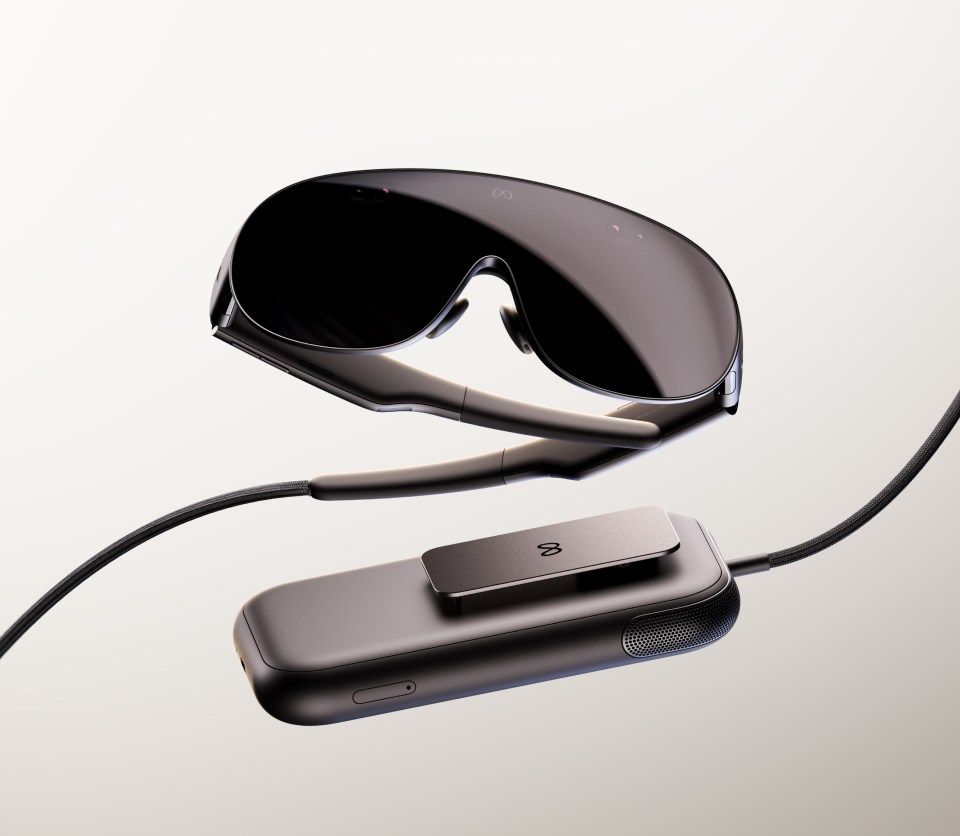
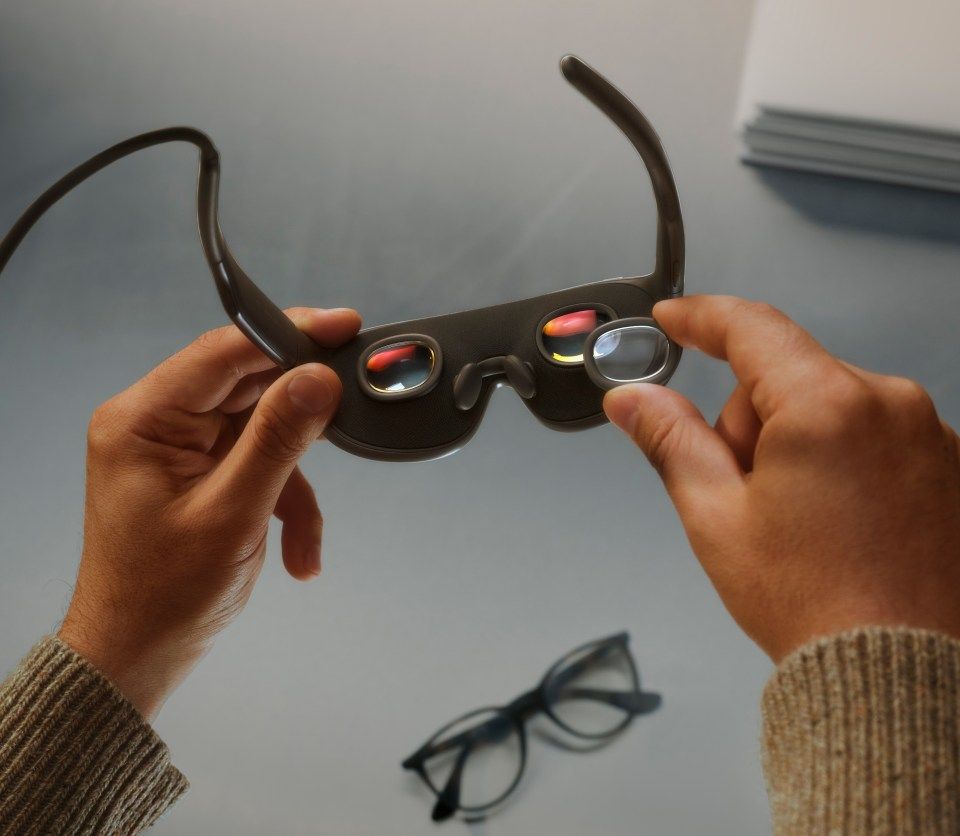
At its annual Connect conference, Meta introduced Meta VR Glasses, a virtual and mixed reality headset built in a glasses form factor that weighs around 100 grams. Previously known by the codename Project Phoenix, the device has no onboard computing of its own: the processor, battery and storage live in a separate puck that fits in a pocket. It is not a Quest 4 but a new product line that runs the same library of games and apps as Quest headsets.
Computing moves to a separate puck
The visor does not even carry a tracking coprocessor. It receives power and data over a thin hybrid fiber optic cable from a puck weighing roughly 300 grams. Inside is Qualcomm's new Snapdragon Reality Elite chip, essentially an XR2 Gen 3 under a new name, paired with 12GB of RAM and 128GB of storage that can be expanded with microSD cards up to 1TB.
With no heat sources on the user's head, the magnesium alloy frame is fanless and passively cooled. An open-periphery design keeps the surroundings visible to the sides and below, while detachable light blockers are available for full immersion.
Meta rates the battery at up to three hours of continuous high-resolution media playback. The puck supports 45W fast charging, and the bundled adapter lets it charge while the headset is in use.
Micro-OLED instead of LCD, at the cost of field of view
VR Glasses is Meta's first headset without LCD panels since the original Oculus Quest. Each eye gets a micro-OLED display with a resolution of 2412 × 2288 pixels and a refresh rate of up to 120Hz. Angular resolution reaches 37 pixels per degree compared to 25 on Quest 3, so even existing Quest apps look sharper thanks to the more powerful chip and eye-tracked foveated rendering.
The trade-off for the compact design is field of view: 70° horizontal by 66° vertical, while Quest 3 covers roughly 110° × 96°. In fully immersive mode, the new device will feel less expansive than Meta's conventional headsets. Color passthrough, on the other hand, reaches 26 pixels per degree versus 18 on Quest 3, which matters for mixed reality use.
Controls, cinema and productivity
The primary input combines gaze and gestures: looking at an element highlights it, and pinching the fingers confirms the selection. Controllers are not included, but the headset works with Touch Plus controllers sold separately in a new black color, as well as with those from Quest 3 and Quest 3S. More than 75 games and apps have already been adapted for hand tracking, including a new Beat Saber mode called Flux.
Meta positions the device as a personal cinema, workspace and gaming console in one. Once the headset launches, owners are promised more than 100 live sports events per year from MLB, NBC Sports, TNT Sports and UFC.
IMAX Enhanced. VR Glasses is the first VR device to receive this certification. Starting in November, Disney+ will stream select Marvel films in 3D, and the first 3D releases from James Cameron's Lightstorm Vision will follow in 2027.
Hologram. This is the first implementation of photorealistic avatars based on Meta's Codec Avatars research. Users will be able to join WhatsApp video calls as a realistic, face-tracked avatar. At launch it will be a stereoscopic video stream, but Meta plans to evolve it into a full 3D system over time.
External video sources. Thanks to USB-C with DisplayPort Alt Mode, a laptop, console or handheld gaming device can be connected directly to the headset. For productivity, there is also wireless streaming of multiple virtual monitors from a Windows PC or Mac.
Meta VR Glasses will go on sale in the US in spring 2027, priced at $1,299.99 for the 128GB version. Meta has not yet announced an exact release date or when preorders will open.
Specifications
- Display: 2 × micro-OLED, 2412 × 2288 pixels per eye, up to 120Hz, 37 PPD, Dolby Vision
- Optics: pancake lenses, 70° × 66° field of view (87° diagonal), manual IPD adjustment 56–70 mm, Zenni prescription inserts
- Processor: Qualcomm Snapdragon Reality Elite (in the compute puck)
- Memory and storage: 12GB RAM, 128GB; microSD up to 1TB
- Cameras and sensors: 6 external cameras for color passthrough (26 PPD) and tracking, 4 internal eye-tracking cameras, face tracking
- Input: eye and hand tracking; Touch Plus controllers (sold separately)
- Audio: Dolby Atmos
- Connectivity: hybrid fiber optic cable to the puck, USB-C with DisplayPort Alt Mode, wireless streaming from PC and Mac
- Battery life: up to 3 hours of media playback (per Meta), 45W fast charging
- OS: Meta Horizon OS (same as Quest 3)
- Build: magnesium alloy frame, passive cooling
- Weight: around 100 g (glasses), around 300 g (compute puck)