Framework Laptop 12 Moves to Intel Core Series 3, Adds Thunderbolt 4 and Preinstalled Fedora
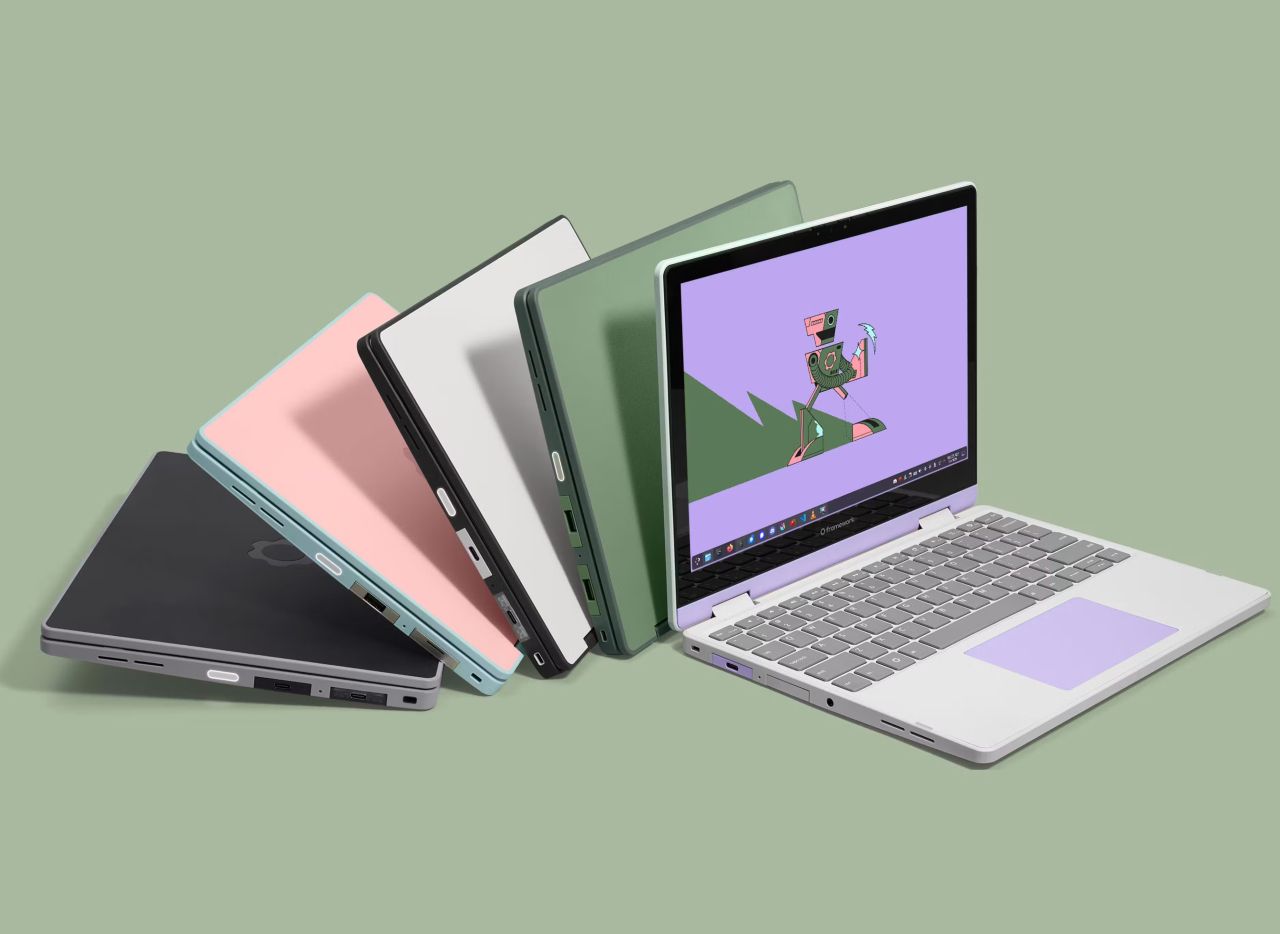
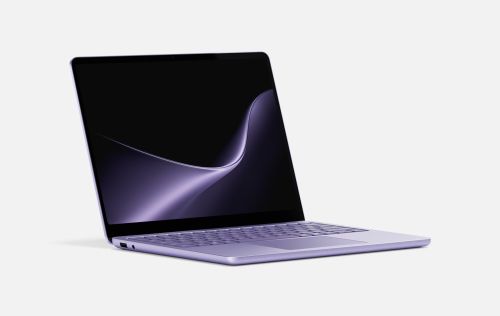
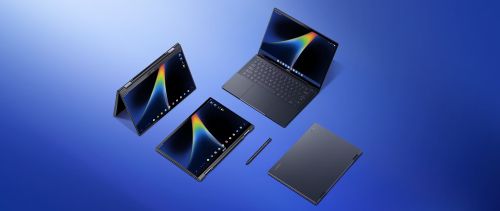
Framework has refreshed its smallest laptop: the Framework Laptop 12 now runs on Intel Core Series 3 processors and, for the first time, is offered in a Core 7 configuration. The platform change brings Thunderbolt 4, Wi-Fi 7, an optional fingerprint reader and a backlit keyboard, while pre-built units ship with Fedora Linux already installed. The hardware itself is unchanged from the outside: the same 12.2-inch convertible with a touchscreen, stylus support and five colourways.
A new Intel platform and longer battery life
The key change is that an entry-priced laptop now carries the architecture of Framework's higher-end models. Core Series 3 uses the same Cougar Cove performance cores, Darkmont low-power cores and Xe3 graphics as the Core Ultra Series 3 platform in the Framework Laptop 13 Pro, just with fewer cores, and it is built on the same Intel 18A process. The original Framework Laptop 12 relied on 13th Gen Intel Core chips, chosen to hit the required balance of price and speed.
Three processors are available: the Core 3 304 with one performance core and four efficient cores, plus the Core 5 320 and Core 7 350 with two performance cores and clocks up to 4.6GHz and 4.8GHz respectively. According to Framework's early testing, a Core 5 320 configuration lasted roughly 70% longer during 4K Netflix streaming than the Core i5-1334U model. The company also says that in single-threaded workloads the Core 5 version of the Laptop 12 performs almost as fast as the equivalent chip in the Laptop 13 Pro.
Ports, memory and wireless
Thunderbolt 4 is now supported in the two upper Expansion Card slots, so the laptop can drive an external GPU or two 4K 60Hz displays. The two lower slots are limited to USB 3.2 Gen 2, but all four still accept power input for charging.
Memory remains user-replaceable: the single SO-DIMM slot now takes DDR5-6400 modules of up to 64GB, up from DDR5-5200 and 48GB in the previous version. Storage runs through one M.2 2230 socket for drives of up to 2TB. The Wi-Fi 7 module, based on Intel's BE213 radio, is also an M.2 card that can be swapped out.
Fingerprint reader and backlit keyboard
Both additions came out of owner surveys, which Framework describes as the two most common requests aimed at the first generation.
The fingerprint reader is built into the power button and comes with every Core 5 and Core 7 configuration.
The backlit keyboard runs on a reprogrammable controller with open source ZMK firmware. It is included with Fedora pre-builts on Core 5 and Core 7, and offered as an option on any DIY Edition.
Linux installed at the factory
Framework's surveys indicate that almost 80% of Laptop 12 owners run Linux, the highest share across the company's products. That is why the line-up now includes pre-built configurations with Fedora 44 KDE Plasma Desktop already loaded, requiring no setup after unboxing. Windows 11 Home and Pro remain available, and the DIY Edition still ships without an operating system.
"It's really exciting to see this device become the first Framework device to ship with KDE and Plasma software. We have put a lot of effort into making sure our software is fun to use with touch and pen input." - Aleix Pol, President of KDE e.V.
There is a technical caveat: Core Series 3 and the BE213 radio are so new that a distro with kernel 7.1 or later is required. Support for the new fingerprint sensor has already been merged into libfprint, and pre-release units have gone out to other distro teams, including CachyOS and Bazzite.
Pre-orders opened on August 18: the DIY Edition starts at $549 and pre-built systems with Fedora Linux at $699, while the first-generation model remains on sale as a DIY Edition from $499. Batch 1 ships in October.
What sets this model apart on the market
The Laptop 12 is still Framework's most affordable machine, and its main difference lies not in the spec sheet but in the ownership model. In the compact laptop segment memory and the wireless module are usually soldered to the board, whereas here the RAM, the SSD and the Wi-Fi card can all be replaced, and the owner picks the port layout from four Expansion Cards.
The second difference is backwards compatibility. The new Core Series 3 mainboard, the fingerprint module and the backlit Input Cover all fit first-generation chassis, so last year's machine can be upgraded piece by piece instead of replaced. For a laptop in this price bracket, that upgrade path is unusual.
The third is a consistent focus on Linux. Rather than claiming nominal compatibility, Framework ships a system with Fedora preinstalled, works with distro teams before units go on sale and opens up its keyboard firmware. Combined with the 360-degree hinge, the shock-absorbing TPU-overmoulded chassis, the recycled content in its parts and five colour options, the result is a niche device aimed at people who intend to repair and upgrade their hardware themselves.
Specifications
- Display: 12.2" LCD, 1920 x 1200, 16:10, 60Hz, over 400 nits, MPP 2.0 and USI 2.0 stylus support
- Processors: Intel Core 3 304, Core 5 320 (up to 4.6GHz), Core 7 350 (up to 4.8GHz)
- Graphics: Intel Graphics with Xe3 cores, up to 2.6GHz
- Memory: 1x SO-DIMM slot, DDR5-6400 up to 64GB
- Storage: 1x M.2 2230 NVMe socket, up to 2TB
- Wireless: Wi-Fi 7, Intel BE213 module
- Ports: 4x Expansion Card slots (upper two with Thunderbolt 4, lower two with USB 3.2 Gen 2, all with USB-PD), 3.5mm combo jack
- Battery: 50Wh, 60W GaN USB-C adapter
- Camera: 1080p 30fps with hardware privacy switch for camera and microphones
- Biometrics: optional fingerprint reader in the power button
- Chassis: plastic with overmoulded TPU and an inner metal structure, 360-degree hinge
- Dimensions and weight: 287 x 213.88 x 18.45mm, 1.3kg
- OS: Fedora 44 KDE Plasma, Windows 11 Home or Pro, DIY Edition ships without an OS
Black Gray Lavender Bubblegum Sage