Xiaomi Reveals Pad 9 Pro Max, Its First Tablet Powered by the In-House Xring O3
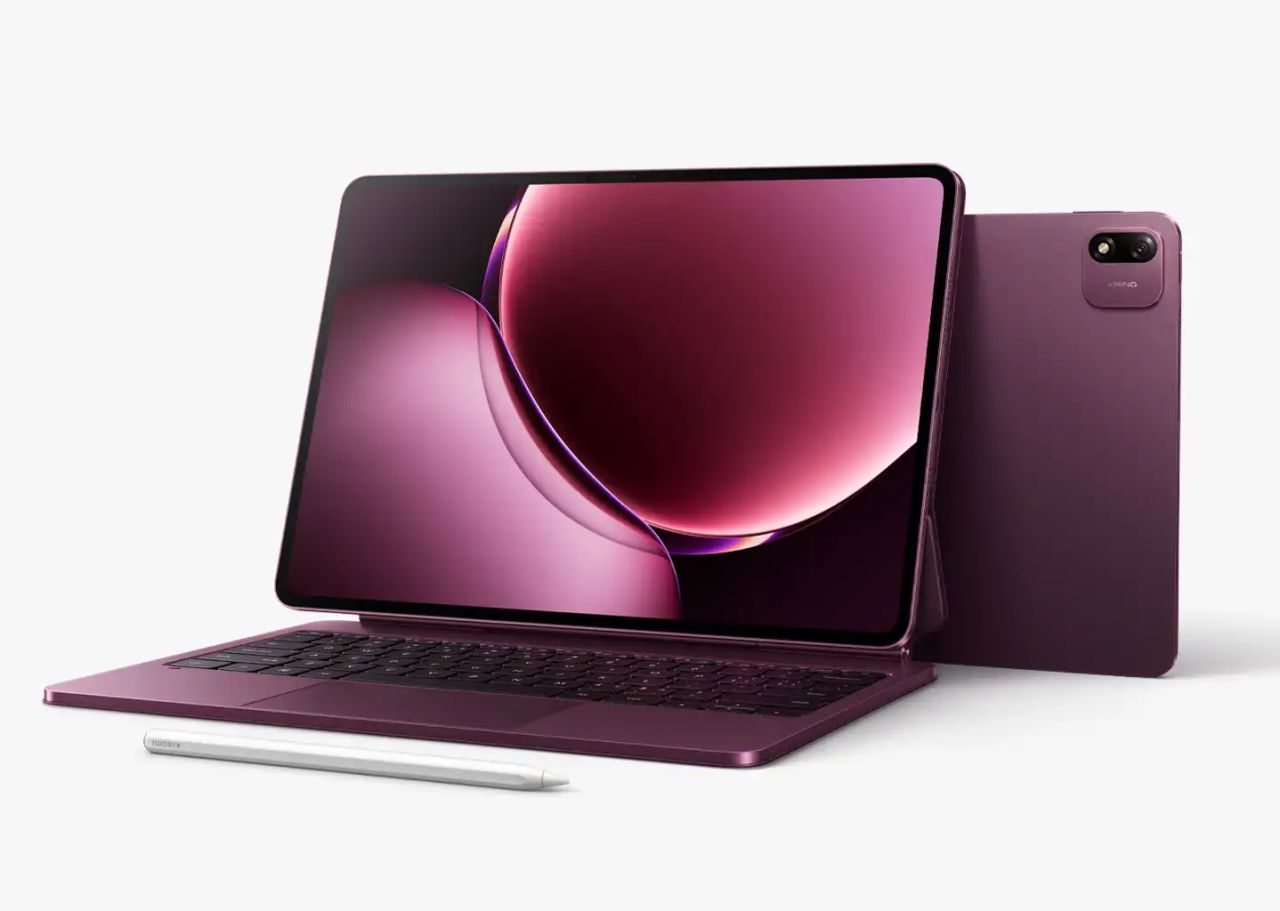
Xiaomi has revealed the design and part of the specifications of the Xiaomi Pad 9 Pro Max, its first tablet built around the company's new in-house Xring O3 processor. The manufacturer is leaning on a 13.3-inch screen, HyperOS 4 and support for PC-level applications, positioning the device as a laptop substitute rather than a conventional Android tablet. It also marks the point where Xiaomi's own silicon stops being an experiment in isolated models and moves into the company's flagship ranges.
What the Xring O3 brings
The Xring O3 is made on TSMC's 3nm N3P process, packs 24 billion transistors and measures 133 mm² in die area. Its CPU drops efficiency cores entirely: two cores run at up to 4.35GHz, another four reach 3.68GHz and the remaining four are capped at 3.15GHz. That layout is meant to leave headroom for sustained workloads, which come up far more often on a large tablet than on a phone.
For the first time in one of its chips, Xiaomi has used a 16-core G2-Ultra NX GPU. According to the company, it is 85% faster than the previous generation while drawing 64% less power.
The redesigned NPU is rated at 200 TOPS of tensor compute and is intended to run Xiaomi's own AI models locally, without a trip to the cloud.
Memory is another notable part of the design. The Xring O3 is the first mobile processor to support the LPDDR6 standard, with bandwidth of up to 113.8 GB/s. That matters more on a tablet than on a phone, since dozens of open windows, video editing and games put far heavier demand on the memory bus.
Screen, body and software
The most visible change is size. A 13.3-inch diagonal places the Pad 9 Pro Max alongside compact laptops rather than tablets. Xiaomi has shown the device in a slim metal body with even, narrow bezels, and a small camera block on the back holding a single module, a flash and the Xring logo. Official images present the tablet in a deep red finish, together with a keyboard case and a stylus.
The Pad 9 Pro Max will be one of the first devices to ship with HyperOS 4. The software has been tuned for large screens, with separately announced support for PC-level applications.
The Xiaomi Pad 9 Pro Max will be presented on September 7 at 7 PM China time during the company's autumn flagship event, alongside the Xiaomi 18 Fold foldable. Xiaomi has not named pricing or configurations yet.
What remains unofficial
Most of the hardware has not been disclosed. Insiders claim the tablet uses an LCD panel, with a separate soft-light version, a battery of more than 10,000mAh and 120W wired charging. The same sources put the weight at roughly 650 grams and say the top configuration may combine 16GB of RAM with 1TB of storage.
A Geekbench entry for model number M367FC scored around 3,470 points in the single-core test and roughly 13,200 in multi-core. Different publications report slightly different figures, so these numbers should be treated as provisional: an engineering sample rarely matches the retail unit.
Specifications
- Display: 13.3", reportedly LCD; a soft-light version is expected
- Processor: Xiaomi Xring O3, 3nm (TSMC N3P), 10 cores: 2x4.35GHz, 4x3.68GHz, 4x3.15GHz
- Graphics: 16-core G2-Ultra NX
- NPU: up to 200 TOPS
- Memory: LPDDR6 with up to 113.8 GB/s bandwidth; unofficially up to 16GB RAM and 512GB or 1TB of storage
- Battery: over 10,000mAh (unofficial)
- Charging: 120W wired (unofficial)
- Weight: about 650 g (unofficial)
- Operating system: HyperOS 4
- Accessories: keyboard case, stylus
- Colour: Red (shown in official images)